Mental Health · Anxiety · April 8, 20265 min read
Anxiety: Your Body's Alarm System and When It Starts Working Against You

After reading this you'll know:
- •Anxiety is a survival mechanism, not a flaw or character weakness
- •It becomes a problem when the alarm stays on long after the threat is gone
- •Chronic anxiety reshapes the brain and body, but the changes are reversible
- •Body-based regulation works where pure thinking and willpower don't
Anxiety is one of the most misunderstood experiences in modern life. We treat it as an enemy, something to silence, suppress, or push through. But the truth is: anxiety is not a flaw. It's a survival mechanism. And understanding the difference between healthy fear and chronic anxiety is one of the most important things you can do for your mental health.
Anxiety Was Designed to Keep You Alive
Long before therapy, medication, or self-help books existed, your ancestors needed a way to survive in a world full of predators, natural disasters, and rival tribes. That's where anxiety comes in.
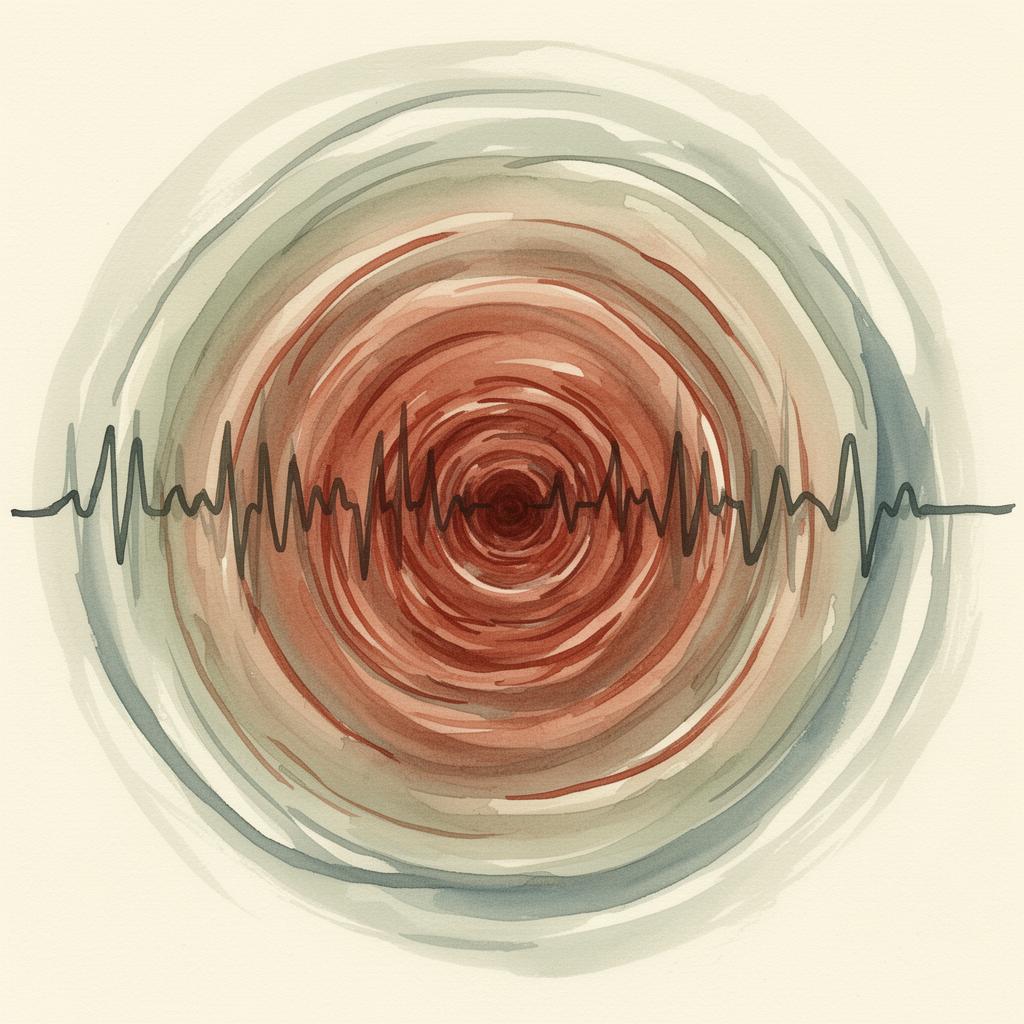
At its core, anxiety is your brain's early warning system. When your brain detects a potential threat, it triggers a cascade of physiological responses: your heart rate increases, your muscles tense, your senses sharpen, and stress hormones like cortisol and adrenaline flood your body. This is the famous fight-or-flight response.
Without this system, your ancestors would not have survived. The ones who felt that spike of fear when they heard rustling in the bushes were the ones who lived long enough to pass their genes on. In evolutionary terms, anxiety is one of the most successful survival tools nature ever created.
So What Goes Wrong?
The problem is that your brain's threat detection system was designed for a very different world. It evolved to respond to immediate physical dangers: a predator, a storm, an attack. These threats were clear, specific, and temporary. Once the danger passed, the alarm switched off.
In modern life, the threats look very different. Financial pressure, social comparison, work deadlines, relationship conflict, news cycles, health worries. These are abstract, ongoing, and often unresolvable in the moment. But your nervous system doesn't know the difference. It responds to an angry email from your boss the same way it would respond to a predator. Except the email doesn't go away. And so the alarm never fully switches off.
Over time, this creates what we call chronic anxiety: a state where your nervous system is stuck in threat mode, scanning for danger even when there is none. Your body remains flooded with stress hormones, your muscles stay tense, your sleep suffers, and your mind races with "what ifs."
The Cost of Ignoring It
Many people learn to live with anxiety. They push through. They tell themselves it's normal, that everyone is stressed, that they just need to try harder. But living in a constant state of survival comes at an enormous cost:
- Physical health: Chronic anxiety weakens your immune system, disrupts digestion, raises blood pressure, and increases the risk of cardiovascular disease.
- Mental health: Prolonged anxiety often leads to depression, emotional numbness, burnout, and a growing sense of disconnection from yourself and others.
- Relationships: When your nervous system is in survival mode, it becomes harder to be present, patient, and emotionally available. You might snap at loved ones, withdraw, or struggle with trust.
- Quality of life: Anxiety shrinks your world. You start avoiding situations, saying no to opportunities, and living within an increasingly narrow comfort zone.
- Cognitive function: Your prefrontal cortex, the part of your brain responsible for clear thinking, creativity, and decision-making, becomes less active under chronic stress. You feel foggy, indecisive, and mentally exhausted.
Why Taking It Seriously Matters
There's a deeply ingrained cultural message that says you should be able to handle your anxiety on your own, that needing help is a sign of weakness. This belief is not only wrong; it's actively harmful.
Anxiety is not a character flaw. It's a nervous system response. And just like you wouldn't ignore a broken bone or a persistent fever, you shouldn't ignore a nervous system that's stuck in overdrive.
The science is clear: untreated anxiety tends to worsen over time. It rewires neural pathways, making your brain more reactive and less resilient. The longer it goes unaddressed, the deeper the patterns become, and the harder they are to shift.
Conversely, when you do address anxiety, whether through therapy, body-based practices, or lifestyle changes, your nervous system can begin to recalibrate. New neural pathways form. Your window of tolerance expands. You start to feel safer in your own body again.
Understanding the Different Faces of Anxiety
Anxiety doesn't always look like what you'd expect. While some people experience classic symptoms like racing thoughts and panic attacks, anxiety can also show up as:
- Perfectionism: Relentless self-criticism and the inability to feel "good enough" are often driven by an underlying fear of failure or rejection.
- People-pleasing: Constantly prioritising others' needs over your own can be a survival strategy rooted in a fear of conflict or abandonment.
- Procrastination: Putting things off is rarely about laziness. It's often a freeze response, your nervous system's way of shutting down when it feels overwhelmed.
- Irritability and anger: When your nervous system is overstimulated, even small frustrations can feel unbearable. Snapping at others is often a sign of a system that's at its limit.
- Physical symptoms: Chest tightness, stomach issues, chronic fatigue, headaches, and muscle tension can all be manifestations of anxiety living in the body.
What Can Help
Healing from chronic anxiety isn't about eliminating fear. It's about restoring your nervous system's ability to move between activation and rest, to feel the alarm when it's needed and let it go when it's not. Some approaches that have strong evidence behind them:
- EFT Tapping: Research shows that tapping on meridian points while processing emotional content significantly reduces cortisol levels and calms the amygdala. It's one of the fastest ways to shift your nervous system out of fight-or-flight. If you'd like to actually learn it, my EFT course is live now for just €7.
- Cognitive Behavioural Therapy (CBT): Helps you identify and restructure the thought patterns that fuel anxiety. CBT teaches you to challenge catastrophic thinking and build more balanced perspectives.
- EMDR: Eye Movement Desensitization and Reprocessing helps the brain reprocess traumatic or distressing memories that keep triggering your anxiety response.
- Nervous system regulation: Practices like breathwork, vagus nerve stimulation, and somatic exercises help your body learn to return to a state of calm after activation.
- Lifestyle foundations: Sleep, movement, nutrition, and connection are not extras. They're the biological foundation your nervous system needs to function well.
A Small Step You Can Take Today
If you're feeling overwhelmed, start with just five minutes. Place your hand on your chest, take a slow breath in for four counts, and exhale for six. This simple act activates your vagus nerve and signals safety to your nervous system. You don't need to fix everything at once. You just need to begin.
💛 When to consider professional support
The tools above can do a lot. But if your anxiety is getting in the way of daily life, your work, your sleep, or your relationships, and the things you've already tried aren't bringing enough relief, please consider reaching out for professional support. A therapist, especially one trained in trauma or nervous system work, can help you in ways that are very hard to do alone. Asking for help is not a sign of weakness. It's a wise next step.
You're Not Broken. Your System Is Overloaded.
If anxiety has been part of your life for as long as you can remember, it can start to feel like it is who you are. But it's not. Anxiety is something your body is doing, not something you are.
Your nervous system learned to protect you in the best way it knew how. And now, with the right support and understanding, it can learn something new: that it's safe to let go.
Taking your anxiety seriously is not self-indulgent. It's one of the most important things you can do for your health, your relationships, and your life.
Read this next