Mental Health · Anxiety · Nervous System · April 27, 20269 min read
When Your Brain Hits the Panic Button: Understanding and Calming Panic Attacks
After reading this you'll know:
- •A panic attack is a false alarm from a brain that is trying to protect you, not a sign that something is wrong with you
- •It is driven by the amygdala, the autonomic nervous system, and a feedback loop between body and mind
- •Causes range from chronic stress and trauma to sleep loss, hormones, caffeine, and unprocessed emotion
- •Most attacks peak within 10 minutes and cannot harm you, even though they feel terrifying
- •Practical body-based tools can shorten an attack in the moment and reduce how often they happen
A panic attack can feel like dying. The heart pounds, the chest tightens, the breath gets stuck somewhere between the throat and the lungs, and the mind screams that something is terribly wrong. People often end up in the emergency room convinced they are having a heart attack or losing their mind. They are not. A panic attack is a false alarm from a nervous system that is doing exactly what it was built to do, just at the wrong moment.
Understanding what is actually happening inside you during a panic attack is one of the most powerful things you can do. Because once you understand the mechanism, the fear of panic itself starts to lose its grip. And that, more than anything else, is what changes the pattern.
What Is a Panic Attack, Really?
A panic attack is a sudden, intense surge of fear and physical sensations that peaks within about ten minutes and usually subsides within twenty to thirty. It often comes seemingly out of nowhere, sometimes even waking people from sleep. Common symptoms include:
- A racing or pounding heart
- Shortness of breath or a feeling of suffocation
- Tightness or pain in the chest
- Dizziness, light-headedness, or feeling faint
- Trembling, shaking, or tingling in the hands and face
- Hot flushes or chills
- Nausea or stomach upset
- A feeling of unreality, as if you are watching yourself from outside (derealisation or depersonalisation)
- An overwhelming sense of doom, of dying, or of losing control
It is one of the most physically intense experiences a human being can have. And yet, despite how it feels, a panic attack is not dangerous. Your body is flooded with stress hormones, but it is doing something it has been designed to do for hundreds of thousands of years.
What Happens in Your Brain
At the centre of every panic attack is a small almond-shaped structure deep in the brain called the amygdala. The amygdala is your internal smoke detector. Its job is to scan everything coming in through your senses and ask one simple question: is this safe, or is this a threat?
When the amygdala detects danger, real or perceived, it sets off an alarm in milliseconds, long before your thinking brain has any idea what is going on. It signals the hypothalamus, which activates the sympathetic nervous system and the HPA axis (hypothalamic, pituitary, adrenal). Adrenaline and cortisol flood your system. Your heart rate increases to pump blood to your muscles. Your breathing speeds up to take in more oxygen. Blood is redirected away from your digestive system and toward your limbs. Your pupils dilate. Your senses sharpen.
This is the fight or flight response. It is brilliant when there is an actual predator. It is terrifying when you are sitting on the couch or standing in the supermarket and your brain decides, for reasons that feel completely unclear, that you are in mortal danger.
Meanwhile, your prefrontal cortex, the part of your brain that handles logic, perspective, and rational thought, gets overridden. The amygdala has a kind of veto power. When it sounds the alarm, it temporarily shuts down the very part of your brain that could tell you, "This is just a panic attack, you are fine." That is why telling yourself to calm down rarely works in the moment. The neural circuitry for calm is offline.
What Happens in Your Body
The body does not separate emotional fear from physical fear. Whether you are running from a bear or sitting in traffic on the way to a job interview, the same biological cascade unfolds:
- Heart and circulation: Adrenaline causes your heart to beat faster and harder, which can feel like palpitations or chest pressure.
- Breathing: You start breathing more rapidly and shallowly into the upper chest. This often leads to hyperventilation, which lowers carbon dioxide levels in the blood and causes dizziness, tingling, and a sense of suffocation, even though you are getting plenty of oxygen.
- Muscles: They tense up to prepare for action. Afterwards, you can feel exhausted, sore, and shaky.
- Digestion: It shuts down. This is why panic often comes with nausea or an urgent need to use the bathroom.
- Skin: Blood vessels constrict and you may feel cold or sweaty, sometimes both.
- Senses: Vision can narrow, sounds can feel muffled or too sharp, and the world can take on a strange, dreamlike quality.
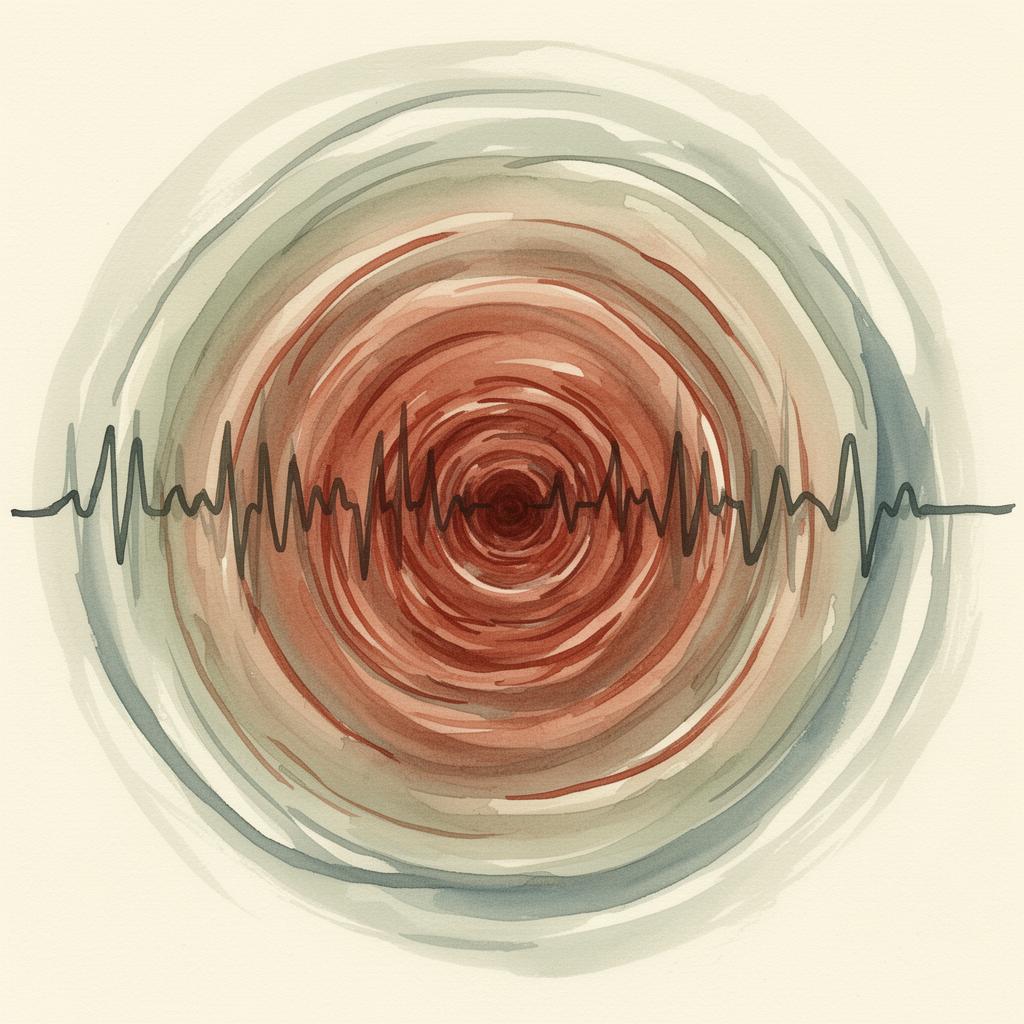
Then comes the second wave: the fear of the symptoms themselves. You feel your heart racing and you think, "Something is wrong with my heart." That thought triggers more adrenaline. Your heart races faster. The fear deepens. This is the panic feedback loop, and it is what turns a brief surge of stress into a full-blown attack.
Why Panic Attacks Happen
People often describe panic attacks as coming "out of nowhere." But there is almost always a story underneath. The trigger may not be obvious in the moment, but the underlying conditions usually are. Common contributing factors include:
- Chronic stress: When your nervous system has been running in overdrive for months or years, it takes very little to push it over the edge.
- Unprocessed trauma: Old experiences stored in the body can resurface as panic when something in the present resembles the original threat, even subtly.
- Sleep deprivation: A tired brain is a hyper-reactive brain. Even one bad night can lower your panic threshold significantly.
- Hormonal shifts: Postpartum, perimenopause, the luteal phase of the menstrual cycle, and thyroid imbalances can all make panic far more likely.
- Caffeine, alcohol, and stimulants: They mimic the physical sensations of anxiety and can directly trigger an attack in sensitive systems.
- Suppressed emotion: Grief, anger, and fear that have nowhere to go often find their way out through the body.
- Major life transitions: Moving, becoming a parent, losing someone, changing jobs, or even positive change can destabilise the nervous system.
- Genetic and biological sensitivity: Some people are simply born with a more reactive nervous system. This is not a flaw, but it does mean their system needs more care.
Once you have had one panic attack, the fear of having another one often becomes a trigger in itself. Your brain becomes hyper-vigilant for any sensation that resembles panic. A slightly faster heartbeat, a moment of dizziness, a tight chest, and the alarm goes off. This is how occasional panic can quietly turn into panic disorder.
What to Do During a Panic Attack
The single most important thing to know is this: you cannot stop a panic attack by trying to stop it. Fighting it feeds it. The goal is not to make it go away. The goal is to ride it out while signalling safety to your nervous system, so the wave can pass faster and cleaner. Here are tools that genuinely help in the moment.
1. Slow Your Exhale
Your inhale activates the sympathetic nervous system. Your exhale activates the parasympathetic. When you make your exhale longer than your inhale, you are sending a direct biochemical signal of safety to your brain through the vagus nerve. Try breathing in for four counts and out for six or eight. Even better, breathe out through pursed lips, as if blowing through a straw. Do this for two to three minutes. It works.
2. Cool Your Face
Splashing cold water on your face, or holding a cold pack against your cheeks and the area around your eyes, activates the mammalian dive reflex. This drops your heart rate within seconds and engages the parasympathetic nervous system. It is one of the fastest physiological interventions available, and it works even when nothing else does.
3. Ground Through Your Senses
Use the 5-4-3-2-1 technique. Name five things you can see, four you can touch, three you can hear, two you can smell, and one you can taste. This pulls your awareness out of the catastrophic thought loop and back into the present moment, gently reactivating your prefrontal cortex.
4. Move, Gently
Adrenaline is meant to be used. Walk, shake out your hands, do twenty slow squats, or push against a wall. Discharging the energy physically helps your body complete the stress response instead of staying stuck in it.
5. Try EFT Tapping
Tapping on acupressure points while acknowledging what you are feeling has been shown in multiple studies to lower cortisol and calm the amygdala. Even a simple round, tapping the side of the hand and the points around the face and collarbone while saying, "Even though I feel this panic, I am safe right now," can shift the wave significantly.
6. Talk to the Panic, Not Against It
Instead of fighting the sensations, try saying to yourself: "This is a panic attack. It is not dangerous. It will pass. My body is just trying to protect me." Naming what is happening reduces its power. You are reminding the part of your brain that is offline that there is, in fact, no real threat.
7. Hand on Heart, Hand on Belly
Place one hand on your chest and one on your belly. Feel the warmth of your own touch. This activates the vagus nerve and releases small amounts of oxytocin, the calming bonding hormone. It is a simple, primal signal of safety.
How to Reduce Panic Attacks Over Time
Managing the moment is essential, but real change comes from working with the conditions that make panic possible in the first place. The aim is to widen your window of tolerance, the range of activation your nervous system can handle without tipping into overwhelm.
- Regulate your baseline: Daily nervous system practices, slow breathing, gentle movement, time in nature, cold exposure, humming, or singing, build resilience over time. They are not optional extras.
- Sleep, ruthlessly: Protect it like your life depends on it. For your nervous system, it kind of does.
- Reduce stimulants: Cut back caffeine, especially in the afternoon. Notice how alcohol affects you the next day. Sugar crashes can also trigger panic-like symptoms.
- Eat regularly: Low blood sugar mimics anxiety and can trigger an attack. Protein and healthy fats help stabilise it.
- Address what is underneath: Therapy, especially modalities like EFT, EMDR, somatic experiencing, or trauma-focused CBT, can help process the experiences and patterns that keep your alarm system on high alert. If you'd like to start learning EFT yourself, my EFT course is live now for just €7.
- Stop avoiding: Avoidance shrinks your world and reinforces the brain's belief that the trigger is dangerous. Gentle, supported exposure is one of the most evidence-based ways to reduce panic disorder.
- Move your body daily: Even a twenty-minute walk lowers baseline cortisol and improves vagal tone.
- Build connection: Co-regulation with safe people is one of the most powerful regulators of the nervous system. We are wired to calm down in the presence of calm others.
Something to Remember in the Middle of It
A panic attack is a wave. Waves rise, peak, and fall. Your body cannot sustain that level of activation for long, the chemistry simply does not allow it. You do not have to do anything heroic. You just have to let the wave move through you while reminding yourself that you are safe, even though you do not feel it. The feeling is not the truth. The wave will pass. It always does.
When to Seek Extra Support
Occasional panic attacks during a stressful period are common and usually settle as life settles. But if panic attacks are frequent, are starting to shape your decisions, or are leading you to avoid places, people, or situations, it is a sign your nervous system needs real support, not more white-knuckling.
This is not weakness. It is biology. And there is a great deal that helps. Therapists trained in trauma and nervous system work, breathwork practitioners, certified EFT practitioners, and sometimes medication used as a temporary bridge, can all play a role. The right combination is different for everyone.
You Are Not Broken. Your Alarm Is Sensitive.
A panic attack is not a sign that something is wrong with you. It is a sign that something inside you is asking for attention, for rest, for processing, for safety. Your nervous system is not betraying you. It is trying, in its loud and clumsy way, to keep you alive.
With understanding, the right tools, and time, panic loosens its grip. People who once could barely leave the house go on to live full, expansive lives. Your nervous system is remarkably capable of learning that it is safe to soften. You are not stuck with this. You never were.
Read this next